





The observability architecturefor the agent era

Object storage. Serverless compute. Built for agent-driven debugging.5× faster incident resolution. 80% lower cost.

100TB+/day220M+ time series/hour4M+ agent traces/dayP99 latency < 1second

Lookout

10 years of Datadog replaced in 6 weeks

Debug in plain English. 1000s of nodes. 300+ dashboards. 2k+ alerts.

Built by engineers behind Rubrik · Amazon S3 · DynamoDB · Snowflake

Nagendra Swamy
Lookout

Cybersecurity leader, trusted by 2k+ enterprises

We’d used Datadog for eight years and we never thought we could easily switch until Oodle proved otherwise. They migrated thousands of nodes, dashboards, and alerts in weeks. Performance improved, costs dropped, and they’ve been a dependable, transparent partner.

Nagendra Swamy

VP Engineering, Lookout

The real problem

AI agents changed debugging
Your architecture has to change too

Legacy disk-backed, fixed-compute architectures were designed for humans using dashboards—not AI agents issuing thousands of queries, in parallel, over full-fidelity telemetry.

logs
metrics
traces
100% telemetry5× the cost

Full-fidelity telemetry

Sampling exists because legacy observability makes storing everything too expensive. Always-on compute and indexing pipelines drive 5× higher costs.

elastic scale1,000×

1,000× more queries

Legacy architectures were built for dashboard users, not parallel agent queries.

Serverless
λ
Lambda
< 1s
answers

Instant answers

Agents expect instant answers. Legacy systems were built for interactive UI.

Debug production, not dashboards

Ask questions in plain English directly from Cursor, Claude, or Slack.

Products

AI

Core Observability

Infrastructure

Digital Experience

AI Canvas product screenshot

You're probably overpaying by $10,000 a month

Here's the line-item math at 100GB logs/day, 50GB traces/day, 500K active time series

$15k$10k$5k$0

Common Parameters

0 GB1500 GB
0 GB1000 GB
05M
30d365d

Detailed Comparison

5.4x cheaper with Oodle
DatadogView official pricing$12,665/mo
ItemRateCost/mo
Logs1.6KB/event$2.50/M events$5,033
Traces1.6KB/span$2.50/M spans$2,517
Metrics$5-$1/100 custom metrics (tiered)$5,000
Hosts$23/host$115
Total$12,665
OodleView plans$2,350/mo
ItemRateCost/mo
Data Ingested (Logs + Traces)$0.30/GB$1,350
Metrics$2.00/1K ATS/hr/mo$1,000
Total$2,350

30 days retention included at no extra charge. Increase retention above 30d to see additional storage cost.

*Metrics: 1 sample per time series every 60s (ATS = active time series / hour). Retention: 30 days included; additional storage billed at $0.001/GB-month. Usage rates shown; see plans above for minimum commitments.

Migration

Drop-in for Elastic, Grafana, Datadog
Not a rip-and-replace

Keep your existing agents, dashboards, alerts, and queries. Run both systems in parallel until you're confident, then cut over. Typically, Elastic and Grafana in < 1 day; Datadog in 2–4 weeks.

Day 1

Step 01

Connect your stack

Point existing agents at Oodle. No code changes required.

Day 1–3

Step 02

Import automatically

1-click dashboard and alert import. PromQL, Lucene, and OTel queries work immediately.

Week 1–4 · Parallel run

Step 03

Validate side by side

Compare results on your schedule. Cut over only when your team is satisfied.

When you're ready

Step 04

Cut over with confidence

Turn off the old stack on your timeline—no forced deadline.

Grafana

Grafana

Native Grafana UI for metrics dashboards and alerts

OpenSearch

OpenSearch

Familiar log explorer with full-text search

PromQL

PromQL

Your existing queries work immediately

OpenTelemetry

OpenTelemetry

Native OTel support for all signals

Zero vendor lock-in. Your data lives on standard formats, your queries use 100% open standards. Oodle earns your business by being better — not by making it painful to leave.

View migration guides

Deployment models

Your data, your rules.

Pick the model that matches your compliance requirements. All three are SOC 2 Type II, ISO 27001, and GDPR compliant.

SaaSRecommended

Fully managed

Oodle manages everything. Fastest path to production. Best for teams that want zero infrastructure overhead.

Zero infrastructure to manage
Up and running in under 15 minutes
SOC 2 Type II, ISO 27001, GDPR
99.9% uptime SLA
Automatic updates and scaling
BYOB

Bring your own bucket

Oodle processes your data. Storage lives in your S3 buckets. You own everything at rest.

Your storage, your encryption keys
Data at rest stays in your account
Quick setup, minimal ops overhead
Good fit for regulated industries
BYOCMaximum control

Bring your own cloud

Full Oodle stack in your VPC. No data leaves your network perimeter. Ever.

Complete data sovereignty
Network isolation, your KMS keys
Zero egress, zero data transfer
Built for Fortune 2000 and financial services

Built differently. Delivers differently.

Lookout

Cybersecurity at enterprise scale.

Trusted by a cybersecurity leader serving 2,000+ enterprises including Fortune 500 and federal organizations.

Read the full case study

Agentic onboarding
Two commands. Full observability.

Your AI agent discovers your environment, deploys Oodle, and starts flowing telemetry automatically. No YAML editing, no cluster provisioning, no ops calls.

Try agentic onboarding
1

Install Oodle Skills

Add the Oodle skill pack to your AI agent.

>_npx skills add oodle-ai/agent-skills -y
2

Run onboarding

In your agent chat, run the onboarding command:

>_/oodle-onboarding
3

Start asking questions

Your data is flowing. Try one:

Show me error rate by service for the last hour
Which pods are restarting most frequently?
Create a service health dashboard
agent - /oodle-onboarding
Preview

Discovering your environment...

Found Kubernetes cluster production - 12 nodes, 47 pods. Helm is used to deploy resources.

Deploying monitoring stack:

helm upgrade --install \
  oodle-observability \
  oodle/oodle-k8s-observability \
  --values oodle-values.yaml \
  --namespace oodle-monitoring \
  --create-namespace --wait
  • eBPF-powered infrastructure metrics
  • Application performance monitoring
  • Logs collection & forwarding
  • Service map & dependency tracking

Frequently Asked Questions

Why does the architecture matter — isn't this just another observability tool?

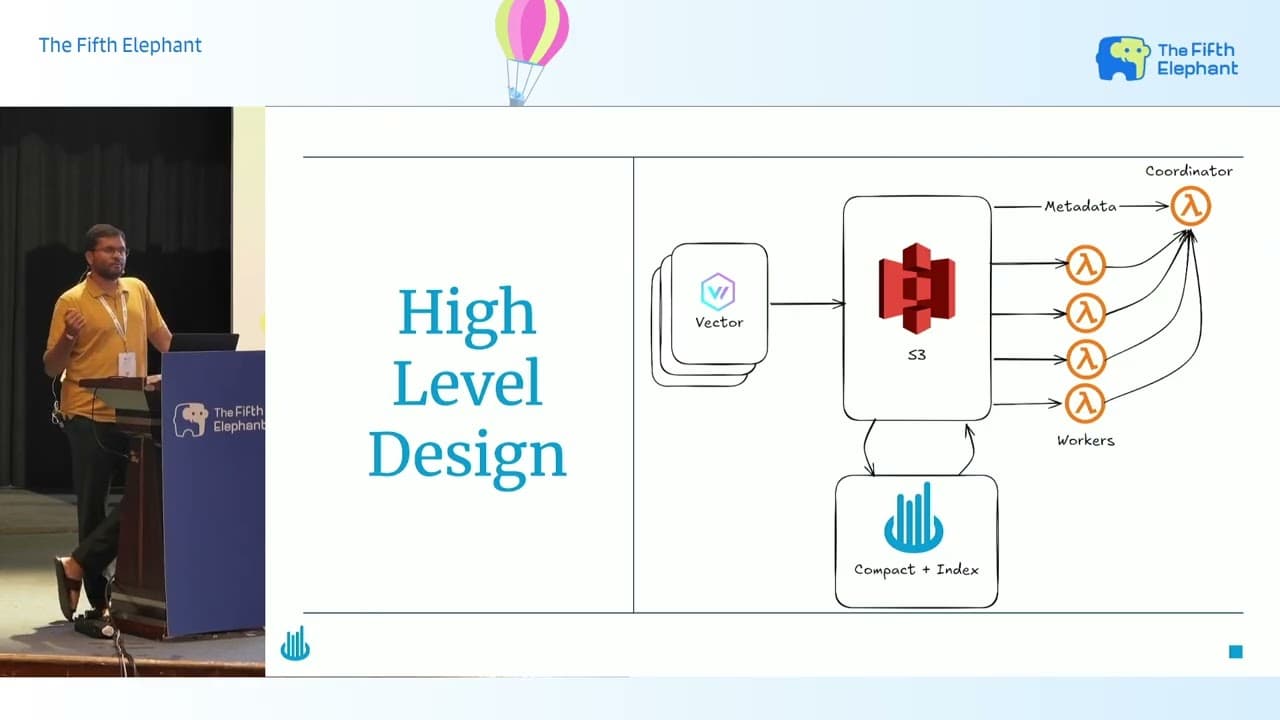
The architecture is the product. Legacy observability platforms were built on disk-backed, fixed-compute infrastructure — designed for humans generating logs at human speed. When AI agents generate telemetry at machine speed (10,000 events in 3 seconds, 1,000 parallel queries per incident), that architecture either collapses under load or bills you into oblivion. Oodle separates storage from compute: telemetry lands on S3 (elastic, cheap, never needs provisioning), and queries run on serverless compute (spins up per request, scales to any concurrency). The result is full-fidelity telemetry you can actually afford to keep, and query performance that doesn't degrade as your data grows.

A single agent workflow can trigger 10,000 log events in 3 seconds. Legacy platforms bill per event. At 100 agents in parallel, that's $14,000+ per month in unexpected charges — before you've even asked a question. Disk-backed architectures also fall over when agents fire thousands of parallel investigative queries; fixed compute clusters weren't designed for that pattern. Oodle stores everything on S3 and queries run serverlessly, so cost stays flat and performance scales automatically.

What does "debug in plain English" actually mean in practice?

You type a question — "why did checkout fail for iOS users in the last 30 minutes?" — and Oodle queries across logs, metrics, and traces simultaneously to find the answer. No PromQL, no manual log filtering, no switching between tools. Available via the Oodle AI Assistant in-browser, or from Cursor and Claude Code via the Oodle MCP server. Engineers at Fello and Labra describe it as their primary debugging workflow: ask the question, get the RCA, move on.

Is it really 5× cheaper? How should I think about the cost model?

The difference comes from how Oodle charges: by data volume (GB ingested), not by events, spans, hosts, or seats. At 100GB logs/day, 50GB traces/day, and 500K active time series, the math works out to ~$2,350/mo on Oodle versus ~$12k/mo on Datadog's per-event/per-span pricing — roughly 5×. Savings compound at scale. Verified by Lookout (80% reduction), Curefit (3×), and others. Calculate your numbers →

How long does drop-in migration actually take?

Grafana and Elastic: 2–3 hours to connect, a day or two to validate. Full migrations (the scale of Lookout — 1,000s of nodes, 2,000+ alerts, 300+ dashboards): 2–6 weeks. The process is 1-click dashboard and alert import, keep your existing agents with no code changes, run both systems in parallel, cut over when you're confident. View migration guides →

What does "enterprise-grade" mean in concrete terms?

SOC 2 Type II, ISO 27001, GDPR, SSO/SAML, RBAC, 99.9% uptime SLA, petabyte-scale capacity, p99 < 800ms query latency at 20TB+/day and 125M+ time series/hour. Oodle never uses your data to train models. Three deployment options: SaaS (Oodle manages everything), BYOB (your S3, your encryption), or BYOC (full stack in your VPC, network isolation, your KMS keys, zero data egress). Built by engineers behind Amazon S3, DynamoDB, Snowflake, and Rubrik.